Is Eloping in Utah Legal? Everything You Need to Know Before You Go
You’ve made the decision.
You’re skipping the 200-person wedding, the seating chart drama, and the venue that costs more than your first car. You’re eloping in Utah. Maybe it’s a red rock canyon in Moab. Maybe it’s a ridgeline in the Wasatch. Maybe you’re not totally sure yet — you just know you want it to feel like you.
Before you start scouting locations and building your playlist, there’s one thing you need to nail down: the legal side. The good news? Utah makes it surprisingly straightforward. Here’s everything you need to know.
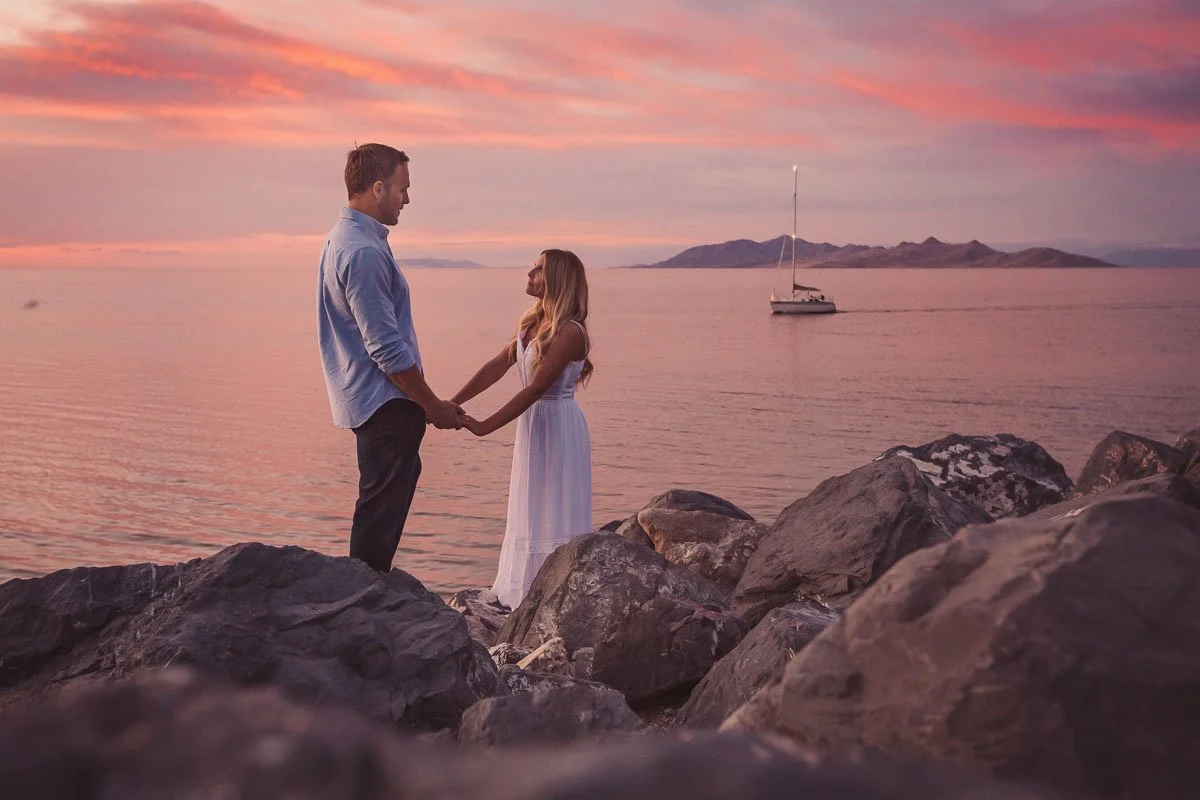
Couple elopement ceremony outdoors near Salt Lake City, Utah
Step 1: Get Your Utah Marriage License
Utah marriage licenses are issued by the county clerk in the county where you plan to get married. If you’re eloping in Salt Lake County, you’ll visit the Salt Lake County Clerk’s office. Eloping in Grand County (Moab)? Head to the Grand County Clerk.
What you’ll need:
Valid government-issued photo ID for both partners, your Social Security numbers, and the filing fee (typically $40–60 depending on the county).
Utah does not have a waiting period — you can get married the same day you receive your license. The license is valid for 32 days from the date of issue, so you have some flexibility in timing.
Important: there’s no residency requirement. You do not need to live in Utah to get married there. Out-of-state and international couples elope here all the time.
Step 2: You Need an Officiant
Someone has to legally marry you. In Utah, the following people are authorized to perform a marriage ceremony:
Licensed or ordained ministers, priests, rabbis, or other religious officiants
Judges, justices of the peace, and other judicial officers
Online-ordained officiants — yes, this counts in Utah
Online ordination through organizations like Universal Life Church is widely accepted in Utah. Many couples have a close friend get ordained online the week before their elopement. It’s simple, free, and keeps the ceremony intimate.
After the ceremony, your officiant signs the marriage license and you (or they) return it to the county clerk’s office. Utah then processes and mails you a certified marriage certificate.
Do You Need a Permit to Elope in a Utah National Park?
This is the question I get most often — and the answer depends on where exactly you want to say your vows.
If you’re in a developed area or on a standard trail: you generally do not need a special wedding permit for a small, informal elopement with 1–2 people (just the couple + photographer). The National Park Service considers this a normal visit.
If you want a specific location, reserved time, or have additional guests: you’ll need a Special Use Permit. Each park handles this differently.
Here’s a quick breakdown by park:
Arches National Park:
Permit required for wedding ceremonies. Apply through the park’s permit office, typically 3–6 months in advance.
Zion National Park:
Wedding permits required. Popular spots like Angels Landing require advance planning.
Canyonlands:
Permit required for ceremonies; less competitive than Arches or Zion.
Capitol Reef:
One of the more relaxed permit processes in Utah’s parks — and one of the most underrated backdrops.
Dead Horse Point State Park:
A Utah state park (not national), managed separately. Contact Utah State Parks directly.
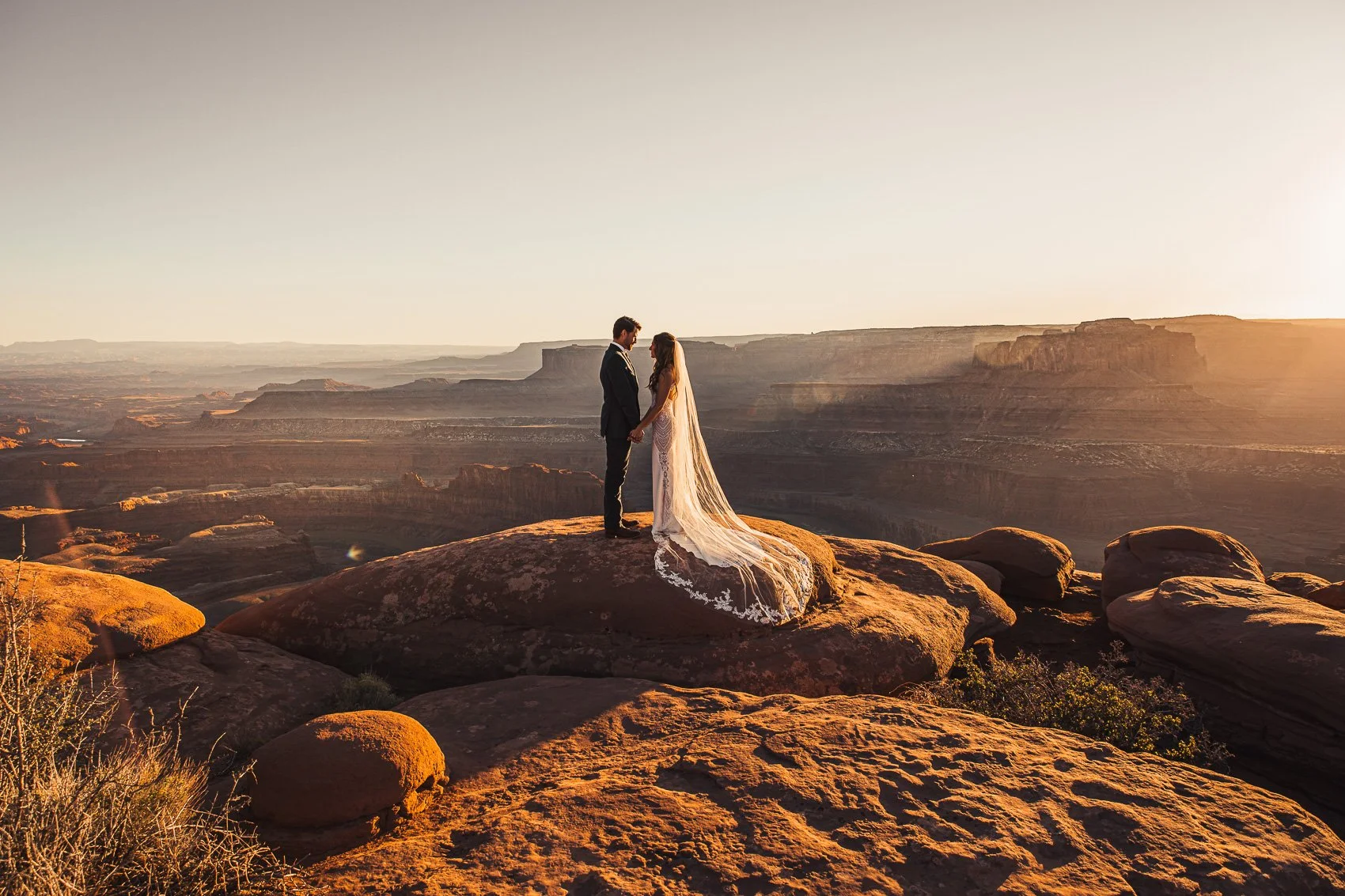
My recommendation: if you want to keep it truly low-key and permit-free, Dead Horse Point, Goblin Valley, and several Bureau of Land Management (BLM) lands near Moab have no permit requirement for small elopements. These are also some of the most dramatic landscapes in the entire country.
What About Eloping in the Mountains Near Salt Lake City?
If you’re dreaming of a Wasatch mountain elopement — think wildflower meadows, granite peaks, and the kind of light that makes every photo look like a painting — you have several options that require zero permits:
Silver Lake at Brighton:
Accessible, stunning, and no permit needed for a small ceremony.
Tibble Fork Reservoir in American Fork Canyon:
Easy access, mountain lake backdrop, free.
Antelope Island State Park:
Utah’s most underrated elopement location — bison, salt flats, and golden hour light unlike anywhere else.
For any ceremony on US Forest Service land in Utah, a small elopement (typically under 25 people) generally doesn’t require a permit. Always verify with the specific ranger district, as rules can vary.
The Bottom Line
Eloping in Utah is absolutely legal, relatively simple to organize, and — in my experience documenting elopements here — one of the most memorable things a couple can do together. The landscape does something to people. You’re not just signing a piece of paper. You’re standing in the middle of something ancient and enormous and choosing each other anyway.
Get the license. Find your spot. The rest will fall into place.
Keith Fearnow is an adventure elopement photographer based in Salt Lake City, Utah, documenting couples across the Wasatch, Moab, and Utah’s national parks. → www.authenticelopementco.com
Want the full breakdown on Utah's best elopement spots? Download our free Insider's Guide to Eloping in Utah — locations, permits, timelines, and the stuff most photographers won't tell you.